

The New Education System
A systems sci-fi short

Let’s say, in the year 2360 CE in a possible future, you are born, through no fault of your own, into a hunter-gatherer society of 34 nomadic bands or camps/communities (average 21 people/band). To avoid being conquered/attacked by marauding hordes (remnant populations of modern humans), all of your ancestors some three centuries before had agreed to live within limits (as they already did) and thereby receive Federation (United Federation of Watersheds) protection.
They also agreed, should any other member of the Federation be attacked, to send a contingent of Earth Guardians to help contain the expansion. This had never happened in the 285 years since your people of place (though nomadic within) had joined the Federation.
Membership did entitle your people to build a Federation Embassy to receive other Federation services, and 87 years ago some fine huts had been built and the Embassy was established by the Federation. One hut was for Federation Mamas (Fedmamas) to live in during visits while providing services that your people had come to value, such as medical and dental care.
In one hut the Fedmamas had decorated it inside to look like a special place. There was a shelf there with 34 “book” things that were all the same. The Fedmamas called it a “library.” All your people knew of books was that they were special, i.e. not to be used to tear pages out of to help start fires or do other things. So for the last 87 years, the books remained on the shelf, rarely opened.
You found the Fedmamas to be ‘persons of interest’. Their books might be the key to understanding them. When your band camped near the Embassy, you would go to the library to open a book and look at what was inside.
The pictures clearly represented familiar things, e.g. mommy, daddy, baby, home, tree, clouds, and river things. The symbols next to them were obviously intended to represent these familiar things, and by using them stories could be told, and with each turn of a page, stories were told, some at sentence length. You could tell others what the story was. Some other children took an interest.
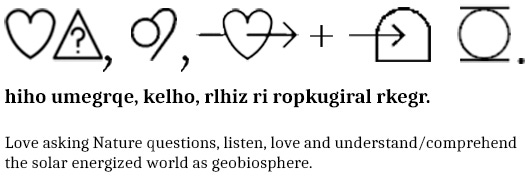
The 34 books all said ‘Book 0’ on the cover. When you had learned to count in the Fedmamas’ ideographs, you realized what the ‘0’ meant — that there could be more than one form of book in the world with different writing in it.
You told this story to others, but they all agreed you were crazy. “You can’t even use pages from the book to wipe your butt, so why would there be different ones?”
When a Fedmama was visiting one full moon to provide medical care, you indicated how interested you had become in the book. She was able, using symbols you had learned, to indicate that you could take one of the books with you when your band traveled elsewhere, provided you took great care to not damage the book. And as there were 34, someone in any of the other bands could also take one.
As I was able to study the book daily, within a few months I had nearly memorized each page and knew what each said. By the end there were only pages of symbols. I had learned to read.

When Dr. Fedmama returned, I proudly displayed my mastery of their written language such as was in Book 0. The next full moon came and in the library there was now a hundred more books, and EACH ONE WAS DIFFERENT! And they were written for children like me.
Dr. Fedmama explained that these books were not to be removed from the library other than to sit nearby to read, as there was only one copy of each, and so of higher value than Book 0. There were more images and more ideographs. The stories got longer, up to a whole page in length. In the last volumes, stories took several pages to tell.
I told Dr. Fedmama how I longed to stay by the library always, but she reminded me I had much to learn from my people and more from Mother (Nature). A few days a month would be enough until I was older.
When I was 13, I was allowed to go alone to the Embassy on slow days and visit with those of other bands (there was almost always one or two bands visiting). Yes, meeting other young people was an attraction (some of the boys were really quite cute), but I always found time to read.
I soon finished reading the 100th book. A month or so passes while I was rereading stories of special interest. Another set of 100 books was placed on a shelf. The second set of encyclopedias was written for older children like me.
And when I was 16, a third set of 100 books appeared that added to the information in the first two with more and smaller symbols. When I was 19, a fifth shelf of books was added as a fourth set of encyclopedias. Others had taught themselves to read and a few were not far behind me in reading them. I invited one of them to live in my hut. Thereby all knew we were married.
When I was 25 the final set of books for mature adults arrived and there were now 501 different books and soon I had read all of them. My first born was now weaned. A person from the Federation I had never seen, who had learned my language and could speak the ideographic language (she showed me how, it was easy, I soon learned to speak what I could read/write) came and we spoke of many things for several days. I was invited to go to the Ecoregion Academy but two week’s walk away.
My mother and sister agreed to care for my son, as my going was understood to be necessary for me to serve my people. In four years I returned, but there was still so much to learn. I could ask for books and in a few weeks one was delivered to the library and when I’d finished reading it I’d leave it and borrow the next that usually was already there. My continued reading was noticed and I was invited to go to the Bioregion Academy. Four years later I returned to my people. Within a year, with the blessing of the Mothers, there was a daughter.
Our library now has seven shelves, an added send/receive shelf, which is enough to support a culture of enough. Without the Federation, my people would have been fully assimilated by Bantu and Indo-European expansionists three centuries ago.
I was called Dr. Mama by those who had known my mentor, Dr. Fedmama. I was now my people’s doctor who was always on call to serve in any emergency. I had learned the new medicine where saving or prolonging a life meant delaying or preventing one from being born. One of the children told me he wanted to be Dr. Mama someday, so I served as his mentor.
At the academy I learned that my people were the least denormalized of all humans. Many of the Fedmamas (never more than two or three at a time) had come to learn from us even though we never knew we were teaching them. They had always brought their own food, so they never imposed.
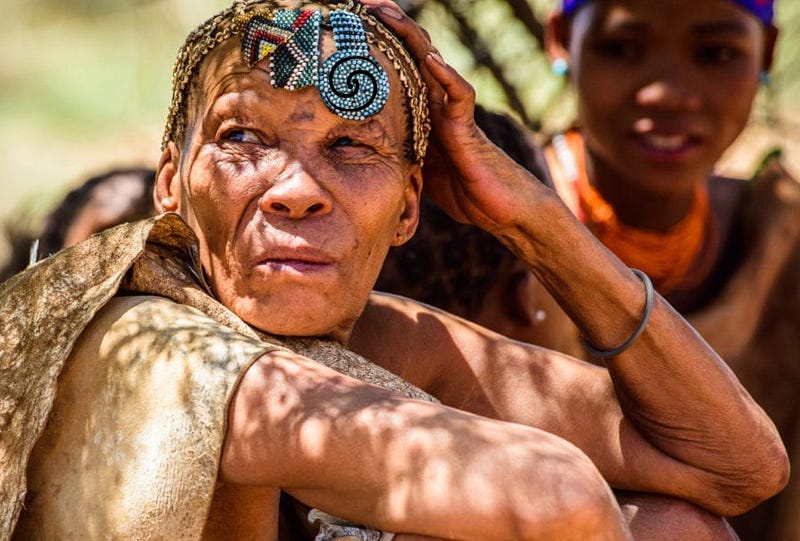
That some of my people learn to read and know many things of other places and times is not an existential threat to the San of the Kalahari. There is no change I would impose on any evolvable people as Mother alone selects for what works. The evolvable must grow wild according to their own nature while endeavoring to listen to Mother. The Elders had always understood this in their own words.
My people are happy. I’m happy. Someday, perhaps by the next millennium, most Fedcitz will be happy and live as one with Mother.
My dear son had joined a different band of sisters when one invited him to live in her hut, while my daughter and her husband remained with me as I was now a grandmother who may serve young mothers and children well. When I retired as Dr. Mama and from grandmothering after my husband died, I went back to live by the local Bioregional Academy for a time. I was invited to be a member of the Southern African Sublate Academy community of learners. As I write, I live near Athens at the Federation Academy of Earth.
There is a lovely olive grove here, but the sunsets are no better (or worse) than where my people of place live, who gather and hunt… and still teach Fedcitz by being what they are. I’m not different in kind from my people or those at Earth Academy, nor from other animals.
I do know why the Fed Academy is located in Athens, but Mother is not impressed, so why should I be? This is a good place to die. May posterity, as handmaidens of Earth, live long and prosper within limits, if Mother allows.
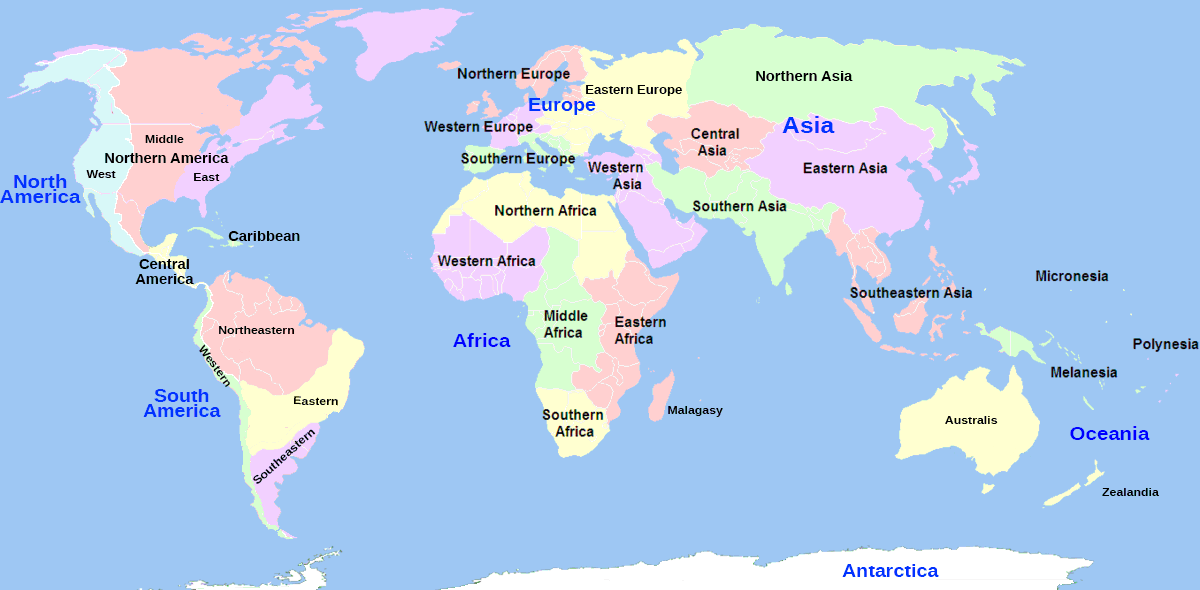
I am told that many of the 3.2 million Fedcitz now seeking to live properly on the planet want to visit my old homeland to learn the old way that worked as the millennia passed. Few can, never more than 20 at a time, but with permission there is now a 35th camp near the Embassy. They try to live as we do, they move the camp like we do, but not far. As they do not hunt and gather unless invited to join us in our foraging, they do not occupy much area and make few demands on resources.
They know they have nothing to teach my people of place, and so come as empty glasses into which some learning can flow. Those who learn go home to teach their kind to become more normal. In another 500 years or so, I’m guessing they will have made notable progress towards again understanding the planet and learning to live properly with it.
“What is the general answer? Eject economic expansionism, stop growth, use available energies for cultural conversion to steady state, seek out the condition now that will come anyway, but by our service be our biosphere’s handmaiden anew.” — Howard T. Odum, Energy, Ecology, & Economics, 1973
The Old Education system and the form of monetary techno-industrial civilization it served was based on zero-order humanism: the ideology (abstracted system of belief that is mis-taken for reality) of the necessary primacy (centrality, value, sovereignty) of the human Self-over-system enterprise built on a foundation of error, ignorance, illusion, and hubris.
The New Education system and the form of civilization it serves is based on zero-order naturalism: the story (abstracted system of models ≠ the modeled) of the necessary primacy (centrality, value, sovereignty) of the natural system-over-self order of things founded on a presupposition of humilitas.
“The most important scientific revolutions all include, as their only common feature [emphasis added], the dethronement of human arrogance from one pedestal after another of previous convictions [beliefs] about our centrality in the cosmos.” — Stephen Jay Gould 1941–2002 CE, paleontologist, biologist, dualist, author
Modern humans cannot stand down, and so must fall down. But 99% of modern humans disagree, QED.
“No, it is not wrong to go back for that which you have forgotten.”