

Spinoza’s God
The Revolutionary Philosophy That Inspired Einstein

If someone put a gun to my my head and said, “I don’t care which god you believe in, but you better believe in one,” and if I wasn’t ready for martyrdom, I’d say, “I believe in Spinoza’s God, don’t you?” to imply I fully assumed they knew of Spinoza’s God. [And if a different gunman said, “I don’t care what religion you have, but you better have one,” I’d say, “Taoism spelled with a ‘T’ (pronounced ‘d’), and not a reformist ‘D’, because I’m old school and like it like that.” (I’d then be shot for adding more than they wanted to know.)]
A video featuring Schopenhauer offered for me to consider led to this one as I’m all good with Spinoza’s God. After many till 3 o’clock in the morning discussions with a small group of Christians in college, I recall one of them, the smartest, telling me after the others had left that I was the most godless person he had ever met — but he was wrong again.
AI Summary
Baruch Spinoza, a 17th-century philosopher, was excommunicated from his Jewish community for his revolutionary ideas about God and nature. He posited that God is the universe itself, and humans are part of this divine reality. His work, “Ethics,” presented his ideas in a mathematical format to legitimize them. Spinoza’s views influenced Albert Einstein, who saw parallels in their understanding of the universe. Spinoza’s ideas about emotions, freedom, and the interconnectedness of all things continue to resonate in modern thought, particularly in psychology and quantum physics. His philosophy encourages understanding natural laws and embracing our place in the cosmos to achieve true freedom and happiness.
Transcript
0:00
When Albert Einstein was asked if he believed in God, students expected a firm no from the world’s most famous scientist, instead, he gave an answer that left them puzzled. “I believe in Spinoza God.”
0:11
What did Einstein mean? Who was Spinoza, and how did a 17th century philosopher who was cast out of his religious community end up influencing one of history’s greatest scientific minds?
0:21
Long before Einstein revolutionized physics, a young man in Amsterdam sparked a different kind of revolution, one that would change how we think about God, nature and our place in the universe. His name was Baruch Spinoza. In 1656, he dared to say something that got him kicked out of his Jewish community.
0:37
God wasn’t a king sitting on a throne in the sky. God was everything, the trees, the stars, the air we breathe, even us. People called him dangerous. They banned his books. Yet today, scientists like Einstein see deep truth in his ideas. Modern thinkers turned to him for answers about freedom, happiness and what it means to live a good life.
0:56
I’ll take you on a journey through his remarkable story, from his early days as a promising young scholar to his life as an outcast who changed the world. We’ll explore why his ideas were so revolutionary, how they shaped modern thought, and why they matter more than ever in our search for meaning.
1:12
Let me start with the moment that changed everything, a warm summer day in July 1656, in Amsterdam, when a 23 year old Spinoza heard words that would mark him forever. Standing before the leaders of his Jewish community, the words echoed through the synagogue. Cursed be he by day and cursed be he by night.
1:29
His crime was asking questions no one dared to ask about God. Born in Amsterdam in 1632 the young man grew up in a community of Jewish families who had escaped persecution in Spain and Portugal. His early life seemed perfect. Top student in religious studies, brilliant mind for philosophy, successful family business. He read everything he could get his hands on, from ancient Jewish texts to the latest scientific discoveries. But his curious mind led him down a dangerous path.
1:54
While grinding lenses for telescopes and microscopes to make a living, he kept thinking bigger and bolder. New discoveries by scientists like Galileo were showing a universe that worked by natural laws. Philosophers like Descartes were questioning everything we thought we knew, and that’s when he asked the question that would change his life, what if we’ve been thinking about God all wrong?
2:14
His ideas spread through Amsterdam like wildfire. Religious leaders saw them as a threat. Friends warned him to keep quiet, but the young man couldn’t stop asking questions, couldn’t stop searching for the truth.
2:24
The price complete exile from his community, no family member could talk to him, no one could even stand near him. Most people would have broken under that kind of rejection. They would have taken it all back, apologized, done anything to belong again.
2:36
It was different for him. He moved to a small room outside town, kept grinding his lenses and wrote ideas that would shake the world. Let me take you inside the young lad’s mind for a moment. So there’s this teenage boy already fluent in six languages, devouring every book he could find. Hebrew texts filled his mornings, Latin and Greek philosophy as afternoons and at night, he’d sneak looks at the latest scientific papers that were shaking Europe awake.
3:00
Amsterdam in the 1640s wasn’t just any city, it was Europe’s publishing capital. New ideas flowed through its streets like water through canals. The youthful Spinoza soaked it all up. He studied Maimonides, a brilliant Jewish thinker who said reason and faith could work together. He read Descartes, who showed how math could explain the universe.
3:19
Know what’s fascinating? The same hands that ground precise glass lenses shaped some of history’s most precise ideas. In his father’s shop, he learned to take rough glass and turn it into perfect lenses for telescopes. Each lens needed endless patience, careful adjustments, absolute precision. Sound familiar? It’s exactly how he built his philosophy, taking rough ideas and polishing them until they became crystal clear.
3:42
Now let me tell you what made these ideas so revolutionary that people are still talking about them today. He looked at the world differently than anyone before him [in the West], while others saw God as a mighty king ruling from above. He saw God in every leaf, every star, every breath of air. God is nature itself [Nature herself, aka Mother].
3:59
He said simple words that turned religion upside down [back to its roots]. In his view, we’re not separate from God [system, aka Gaia].. We’re part of God.
3:59
Picture a wave in the ocean. A wave isn’t separate from the ocean. It’s the ocean expressing itself in that moment. That’s how he saw everything in nature, including us. We’re all expressions of one infinite reality. People called this view crazy, even evil, but centuries later, Albert Einstein would call it profound.
4:22
Let me break down what made his ideas so powerful. He said there aren’t two separate worlds, the physical world and the spiritual world. There’s just one world seen from different angles, like how water can be liquid ice or steam, still water just showing itself differently [the first modern human becomes sane, a mutation].
4:36
He went even further, if everything is part of one reality, then everything follows natural laws. Nothing happens by accident or miracle, even our thoughts and feelings follow patterns we can understand, just like we understand how planets move or how plants grow.
4:51
The most mind blowing part is that Spinoza said true freedom isn’t about doing whatever we want [paraphased, not exact quote]. Most people think freedom means no rules, no limits. He turned that idea on its head by saying that we’re truly free when we understand the natural laws that guide everything, including our own minds. It’s like learning to swim. You don’t fight the water. You work with it. Understand it, move with it.
5:11
Ever tried to read the most dangerous book of the 1600s? Spinoza’s Ethics looks more like a geometry textbook than a revolutionary manifesto. Page after page of definitions, axioms, proofs. Why? Because he played a brilliant move. He hid radical ideas in the most respectable format of his time. Think about it. Who could argue with math? If A equals B and B equals C, then A must equal c. By writing his ideas this way, he showed they weren’t just opinions. They followed logically, like solving an equation, and hidden in those mathematical looking pages, ideas that would change the world. He starts with God. Proves God must be nature itself. Then builds step by step to show why humans can find true freedom and happiness.
5:54
Religious leaders banned the book immediately, yet copies spread across Europe, passed secretly from hand to hand, influencing everyone who read them. Now, these ideas weren’t just abstract philosophy. They led him to some pretty radical conclusions about how to live a good life.
6:08
Have you ever noticed how strong emotions can make us feel out of control? Spinoza cracked the code on this centuries ago. He said, our feelings aren’t random. They follow rules, just like everything else in nature. When we understand these rules, we gain real power over our lives.
6:22
Take anger, for example. Most people either try to fight it or just let it take over. Spinoza offered a different way. Don’t fight the emotion. Study it. Where does it come from? What triggers it? Once you understand its causes, it loses its grip on you. The emotion doesn’t control you anymore. You start steering it.
6:38
Here’s where he gets really practical. And trust me, this might change how you think about happiness. Most of us chase happiness like it’s something we need to grab and hold onto. He said, True happiness isn’t about getting what we want. It’s about understanding our place in the bigger picture of nature. Stop fighting what you can’t change and start working with the natural flow of life.
6:57
Think about surfers. The best ones. Don’t try to control the ocean. They learn its patterns. They work with the waves, not against them. That’s exactly what he meant by living wisely. Learn the patterns of life flow with them, and you’ll find a deeper kind of freedom.
7:11
But Spinoza didn’t stop there. His ideas about freedom led him somewhere nobody expected. He saw that we’re all connected, not in some fuzzy feel good way, but literally, every action ripples out and affects everything else. When you really get this, he said, you stop seeing other people as strangers. You start caring about their well being as much as your own, not because you should, but because you understand we’re all part of the same reality.
7:34
Speaking of reality, want to know how these ideas from a 17th century philosopher ended up influencing one of the greatest scientists ever? Let me show you the fascinating connection between Spinoza and Einstein. Einstein kept a worn copy of Spinoza’s books in his library. When reporters asked him about God, he’d always bring up Spinoza because both men saw something amazing. The Universe runs on precise, beautiful laws we can actually understand. Remember how Spinoza said God isn’t a person in the sky, but the entire universe itself. Einstein found deep truth in this.
8:06
His theory of relativity showed space, time and matter aren’t separate things. They’re all connected in one big cosmic dance, just like Spinoza had said centuries earlier, everything is part of one unified reality. And guess what? Scientists today are finding even more connections to Spinoza ideas.
8:25
When quantum physicists study the tiniest bits of matter, they find weird connections. Particles on opposite sides of the universe somehow affect each other instantly. It’s exactly what Spinoza talked about. Everything in nature is deeply connected part of one whole system.
8:39
But Spinoza’s influence goes way beyond science, his ideas about freedom and understanding our emotions, modern psychology backs them up. When therapists help people understand their emotional triggers and patterns, they’re using his insight that understanding brings freedom. Now here’s why all this matters for you and me today.
8:56
We live in a world that often feels divided and chaotic. Spinoza shows us a different way to see things. Every tree, every animal, every person, we’re all expressions of the same universe. When you really get this, it changes how you treat others, how you handle problems, how you live your life. Think about climate change. If we saw nature as he did, not as something separate from us, but as part of who we are, would we treat our planet differently?
9:20
If we understood that harming nature means harming ourselves, wouldn’t our choices change? Ready to hear how you can use these powerful ideas in your own life? Spinoza life shows us something powerful. One person asking deep questions can change how millions of people think.
9:34
A young man who lost everything for his ideas ended up influencing Einstein and countless others who shaped our world. When you look at the sky tonight, try seeing it through his eyes. Those stars aren’t just distant lights. They’re part of the same reality you are, the air you’re breathing, the ground under your feet, your own thoughts and feelings, all expressions of one amazing universe.
9:34
And here’s the really exciting part, you can start using these ideas right now. Next time you feel overwhelmed by emotions, remember his insights. Fights. Don’t fight them. Understand them. Look for the patterns. Each time you do this, you gain more freedom, more peace. When you face problems, think bigger. How does this fit into the larger picture? What can you learn from it? That’s what Spinoza did. He turned exile into opportunity, loneliness into wisdom.
10:16
I’d love to hear what you think about these ideas. Drop a comment below sharing how Spinoza vision of the universe speaks to you. If you enjoyed exploring these big ideas with me, hit that subscribe button and join me for more journeys through history’s most fascinating minds. Remember, sometimes the most powerful ideas aren’t new ones, they’re ancient wisdom waiting to be rediscovered. Thanks for watching, and I’ll see you in the next video. Why being intelligent is hated by society, according to Schopenhauer.
Descartes, the dualist, was mentioned, but not that his philosophy is antithetical to monist Spinoza’s. I expect that Descartes will be celebrated by Apathy as another pilar of Western philosophy, as if both can be right.
This is an okay to good text intro to Spinoza and better video intro (I’m guessing, I didn’t watch it). Why I list Spinoza as the first modern cultural physician should be evident. When I was maybe 17 I came across a scholar’s summary of Spinoza that boiled down to his message that “to understand something is to be delivered from it.”
Those may will be the exact words, as they struck me as a possible key to deliverance, but I have not verified that. That “understanding” was central to Spinoza teaching, the lack of which was his diagnosis, and acquisition the cure, I have repeatedly verified over the last 55 years. Whenever I have found myself in a condition I needed to be delivered from (e.g. relationship issues), I assumed I did not yet understand my situation and so knew what to do: endeavor to understand it. With understanding comes deliverance, if only by acceptance. Understanding the condition of metastatic modernity (the human predicament or problematique), our existing paradigm, has the same outcome. Our non-viable form of human was a mutation. A Spinozian “understanding” would be a counter-mutation that leads to a renormalizing of humans, i.e. a “paradigm shift,” aka “deliverance.”
“In order to change an existing paradigm you do not struggle to try and change the problematic model. You create a new model and make the old one obsolete. That, in essence, is the higher service to which we are all being called.” — R. Buckminster Fuller
Spinoza Quotes
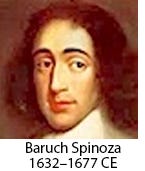
“The highest activity a modern human being can attain is to endeavor to understand, because to understand one’s condition is to be delivered from it.” — Baruch Spinoza 1632–1677 CE, one of the most important philosophers — and certainly the most radical — of the early modern period [God=Nature=System]
“Nothing in the universe is contingent, but all things are conditioned to exist and operate in a particular manner by the necessity of the divine nature.” ― Baruch Spinoza
“The eternal and infinite being we call ‘God’ or ‘Nature’ [Deus sive Natura] necessarily acts as it does.” ― Baruch Spinoza
“God is not He who is, but That which is.” ― Baruch Spinoza
“Whatsoever is, is in God, and without God nothing can be, or be conceived.” — Baruch Spinoza
“God is the Immanent Cause of all things, never truly transcendent from them.” — Baruch Spinoza
“Man can, indeed, act contrarily to the decrees of God, as far as they have been written like laws in the minds of ourselves or the prophets, but against that eternal decree of God, which is written in universal nature, and has regard to the course of nature as a whole, he can do nothing.” — Baruch Spinoza
“God is the efficient cause not only of the existence of things, but also of their essence. Corr. Individual things are nothing but modifications of the attributes of God, or modes by which the attributes of God are expressed in a fixed and definite manner.” — Baruch Spinoza
“The doctrines added by certain churches, such as that God took upon himself human nature, I have expressly said that I do not understand; in fact, to speak the truth, they seem to me no less absurd than would a statement, that a circle had taken upon itself the nature of a square.” — Baruch Spinoza
“The holy word of God is on everyone’s lips…but…we see almost everyone presenting their own versions of God’s word, with the sole purpose of using religion as a pretext for making others think as they do.” — Baruch Spinoza
“My purpose is to explain, not the meaning of words, but the nature of things.” ― Baruch Spinoza
“We must take care not to admit as true anything, which is only probable. For when one falsity has been let in, infinite others follow.” ― Baruch Spinoza
“The endeavor to understand is the first and only basis of virtue.” ― Baruch Spinoza
“Not to laugh, not to lament, not to detest, but to understand.” ― Baruch Spinoza
“I have laboured carefully, not to mock, lament, or execrate human actions, but to understand them; and, to this end, I have looked upon passions, such as love, hatred, anger, envy, ambition, pity, and the other perturbations of the mind, not in the light of vices of human nature, but as properties, just as pertinent to it, as are heat, cold, storm, thunder, and the like to the nature of the atmosphere, which phenomena, though inconvenient, are yet necessary, and have fixed causes, by means of which we endeavour to understand their nature, and the mind has just as much pleasure in viewing them aright, as in knowing such things as flatter the senses.” ― Baruch Spinoza
“Pride is pleasure arising from a man’s thinking too highly of himself.” — Baruch Spinoza
“The supreme mystery of despotism, its prop and stay, is to keep men in a state of deception, and with the specious title of religion to cloak the fear by which they must be held in check, so that they will fight for their servitude as if for salvation, and will think it not shameful, but a most honorable achievement, to give their life and blood that one man may have a ground for boasting.” — Baruch Spinoza
“The more you struggle to live, the less you live. Give up the notion that you must be sure of what you are doing. Instead, surrender to what is real within you, for that alone is sure… you are above everything distressing.” — Baruch Spinoza
“The more clearly you understand yourself and your emotions, the more you become a lover of what is.” ― Baruch Spinoza
“Do not weep. Do not wax indignant. Understand.” ― Baruch Spinoza
“Reality is one substance with everywhere two (among many) attributes or aspects — material extension and spaceless truth. We are among those parts of reality that can perceive” — Baruch Spinoza
“Those who are governed by reason desire nothing for themselves which they do not also desire for the rest of mankind.” — Baruch Spinoza
“No matter how thin you slice it, there will always be two sides.” — Baruch Spinoza
“Peace is not the absence of war, it is a virtue, a state of mind, a disposition of benevolence, confidence, justice.” — Baruch Spinoza
“Men are mistaken in thinking themselves free; their opinion is made up of consciousness of their own actions, and ignorance of the causes by which they are determined.” — Baruch Spinoza
“Be not astonished at new ideas; for it is well known to you that a thing does not therefore cease to be true because it is not accepted by many.” — Baruch Spinoza
“I would warn you that I do not attribute to nature either beauty or deformity, order or confusion. Only in relation to our imagination can things be called beautiful or ugly, well-ordered or confused.” ― Baruch Spinoza
“In a natural state, there is nothing which can be called just or unjust, only in a civil state.” — Baruch Spinoza
“The more we know of particular things, the more we know of God.” — Baruch Spinoza
“Emotion, which is suffering, ceases to be suffering as soon as we form a clear and precise picture of it.” ― Baruch Spinoza
“A person’s rights are equivalent to his power.” — Baruch Spinoza
“If you want the present to be different from the past, study the past.” ― Baruch Spinoza
“Nothing comes to pass in nature, which can be set down to a flaw therein; for nature is always the same, and everywhere one and the same in her efficacy and power of action: that is, nature's laws and ordinances, whereby all things come to pass and change from one form to another, are everywhere and always the same; so that there should be one and the same method of understanding the nature of all things whatsoever, namely, through nature's universal laws and rules.” —Baruch Spinoza
“Nature has no goal in view, and final causes are only human imaginings.” — Baruch Spinoza
“My atheism, like that of Spinoza, is true piety towards the universe and denies only gods fashioned by men in their own image, to be servants of their human interests.” ― George Santayana
I guess I’m reading Spinoza now
Thanks Eric